Excavating Contractor in Volusia County: Before Heavy Rain
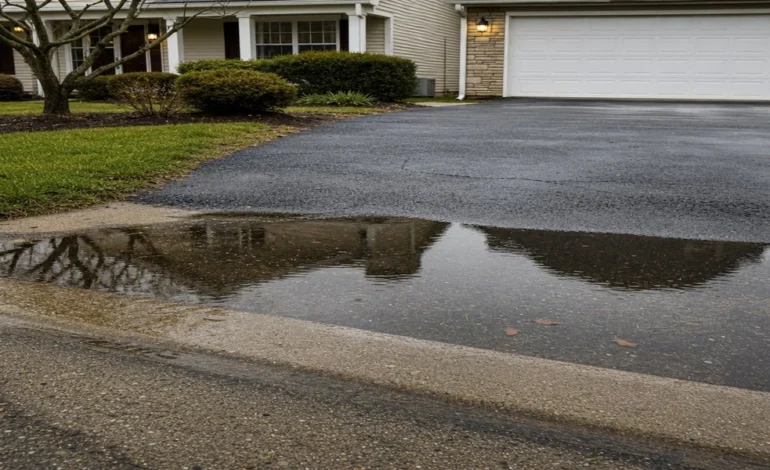

It looked okay, until there was a chance of heavy afternoon storms. Suddenly, the small issues around the driveway did not seem like little problems anymore. There was standing water around the apron. Pieces of the asphalt edge were starting to crumble. And on one side, sandy soil had eroded enough to form a small depression where runoff was continuously digging a path.
At that point, for the homeowner, the project became much more than just repaving the driveway. Blacktop By Beede Paving might have helped the appearance of the driveway, but it would not have fixed the underlying issue that caused the driveway to deteriorate. If the driveway surface needed to be repaired, then the subgrade needed to be addressed.
Warning Signs of a Deeper Issue
There are several signs that can indicate a bigger problem. A small crack begins near the driveway’s edge. A slight depression holds water after a rain. A soft shoulder sags slightly under the pressure of tires. In sandy soil, these conditions can develop quite quickly, since the loose soil is easily moved by water (click here), which removes support from the pavement.
The most prominent sign of the problem was the apron. Rather than draining away from the driveway, stormwater pooled against the driveway and seeped underneath it. When water gets to the base of the pavement, the asphalt can start to bend, crack, and separate from its support.
That is why an excavating contractor in Volusia County must evaluate more than the pavement surface. The question is not simply what cracked but why it cracked in the first place.
What the Crew Saw During the Inspection
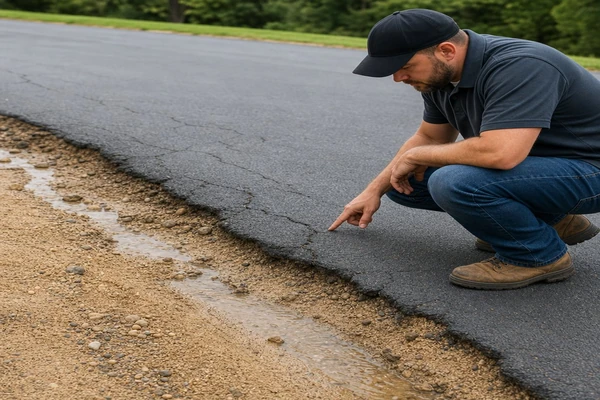
The contractor did not just look at the blacktop. He inspected the whole area to see how water drained across the property. He assessed the slope from the driveway to the apron, the condition of the soft pavement edges, and the areas where runoff had displaced the sandy soil.
The main issues the contractor saw included:
- Cracking asphalt along the unsupported pavement edges
- Pooling water at the apron
- Unstable base material under the damaged pavement
- Sand being washed away during rainstorms
- Grading that directed water to weak areas
These observations made a big difference in the contractor’s approach. While he could have put down new asphalt to cover the cracks and potholes for a short time, it would not have addressed the issue of water reaching the base of the pavement.
“The majority of pavement failures are drainage problems that manifest on the surface,” explains Aaron Mills, a site prep supervisor. “If you do not fix the grade and the base, you are not going to be able to keep new asphalt on top for very long.”
Why Excavation Was Necessary
The excavation work performed on this job was not just about removing the failed section of pavement. Excavation sets the stage for how long the driveway will last.
Since the old pavement was failing, it needed to be removed so the contractor could get at the base of the pavement. Then, loose material was excavated. Any low spots were filled in. And new base material was installed and compacted to provide solid, uniform support under the driveway.
The contractor also paid close attention to how water drained off, as you can read at www.wmo.int/topics, the driveway. Rather than pooling in shallow depressions, runoff needed to flow away from the apron and edges. Pavement follows the surface underneath it, so any low spots or soft spots or incorrect slopes under the pavement will inevitably show through on top.
For an excavating contractor in Volusia County, this stage of the project is vital before the asphalt is laid. A rainy afternoon can expose whether or not the contractor has done a good job at this stage. A driveway may look smooth on the first day, but without proper drainage, the pavement may not hold up.
The Importance of Grading Prior to Blacktop
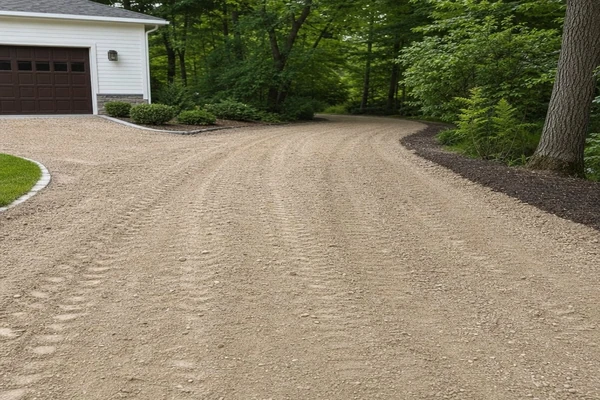
The contractor knew he could not apply asphalt before addressing the foundation of the driveway. First, the contractor needed to remove the unstable pavement and the weak base. Then, he had to regrade the driveway, build a new base, and compact the base material. Only then could the driveway be paved.
This sequence avoided a common scenario: fixing a base problem by adding more asphalt. You cannot use asphalt to replace proper drainage or a stable base. Sure, asphalt can cover up irregularities, but if the underlying issues are left unchecked, water will continue to reach the pavement base.
When the excavation work was finished, the driveway was built on a solid base. The apron no longer served as a collection basin. The pavement edges were better supported. Runoff had a more direct route away from the driveway.
There are a couple of details you can keep in mind before the process begins. Identify existing irrigation lines and any utility markings. Also, identify any landscaping around the edges.
This helps the team do the work more cleanly and avoid extra work if anything gets damaged. It also helps the process move along more smoothly once the old surface is removed.
Getting Ahead of the Next Storm
It is easy to overlook driveway problems when there are showers in the forecast. A pool of water by the apron, an eroded shoulder, or cracked pavement may suggest a deeper issue under the driveway.
Rather than treating the excavation process as an add-on when these types of signs show up, homeowners should take the time to properly grade their driveways, prepare the base, and plan drainage. These steps can mean the difference between blacktop that merely looks new and pavement that is prepared for the next rainstorm.